“What would everyday life look like if we could actually keep a dinosaur as a pet?”
Have you ever had that thought?
Thanks to movies, anime, and games, more people than you might think secretly dream of “living with dinosaurs.” Some might even be thinking, “If there were a small dinosaur that could live indoors, I’d totally keep it as a pet,” or “My kid is obsessed with dinosaurs, so I’ve been researching as if we could actually keep one.”
However, when you search online, most of what you find is either purely academic information or complete fiction. There is almost nothing that answers questions like “What would you actually need to keep one?”, “How would daily life change?”, or “How much space and money would it realistically take?” from a down-to-earth, real-life perspective.
This article is here to thoroughly answer your question: “If I seriously wanted to live with a dinosaur, what would it really take?” We’ll dive into it from the angle of “What if this were actually possible in the real world?”
I myself was the kind of kid who genuinely thought, “I want to keep a Tyrannosaurus at home.” Even now as an adult, I can’t help getting excited when I watch dinosaur documentaries on Netflix or movies like Jurassic World.
But the moment you start asking, “If I really did keep one, where would I even start?”, things suddenly feel a lot more real, don’t they?
・Will the floor cave in?
・Will the roar turn into a noise-complaint nightmare?
・How much poop are we talking about?
・What do you do if it gets sick?
This guide takes these simple but important questions and, instead of treating them as pure fantasy, answers them from the standpoint of, “If we really could keep a dinosaur, what would life actually look like?”
In this article, we’ll carefully and clearly walk through topics like the following:
✅ Chapter 1: Permits and Legal Barriers
-
Where would you apply for permission to keep a dinosaur?
-
What are “Designated Animal Handling Permits” and “Endangered Species Protection Laws”?
-
A look at how laws might be structured if dinosaur genes were actually revived
✅ Chapter 2: Required Room Size and Structure
-
Could you keep a small dinosaur in a six-tatami-mat room?
-
Concrete examples of floor strength, wall materials, and escape-prevention measures
-
How would you adapt things in a rental apartment or condominium?
✅ Chapter 3: Food, Water, and Nutrition Management
-
Completely different diets for carnivorous vs. herbivorous dinosaurs
-
Feeding-cost simulations (around $65 a month? $640?)
-
How to store food and deal with smells
✅ Chapter 4: The Amount of Waste and How to Handle It
-
How much comes out every day? What about odor and pests?
-
How to set up an indoor toilet and a realistic cleaning schedule
-
Examples of using automatic pet-waste cleaning robots
✅ Chapter 5: Temperature and Humidity Control
-
Are dinosaurs cold-blooded or warm-blooded?
-
Air-conditioning in summer? Underfloor heating in winter?
-
Ideal room-temperature and humidity ranges for a comfortable dinosaur life
✅ Chapter 6: Play, Training, and Communication
-
Does a dinosaur need toys?
-
Can you train it? Will it bite if you scold it?
-
Will it come when you call its name? Will it “answer” with a roar?
✅ Chapter 7: Lifespan and Long-Term Life Planning
-
Is a dinosaur’s lifespan longer than a dog’s?
-
Might your children end up taking over the responsibility?
-
The reality of aging and long-term care
✅ Chapter 8: Illness, Injury, Insurance, and Medical Costs
-
Would there be vets who specialize in dinosaurs?
-
Would insurance companies sell dinosaur insurance?
-
How much would treatment actually cost? Could a dinosaur even fit in an MRI machine?
✅ Chapter 9: Keeping Multiple Dinosaurs and Coexisting with Dogs and Cats
-
Checking compatibility between dinosaurs and dogs/cats
-
How to prevent sudden fights
-
House rules for managing different vocalizations and training styles
✅ Chapter 10: Other Things You’re Probably Wondering About
-
How loud is the roar in decibels? Louder than a jet engine?
-
An emergency manual for when your dinosaur escapes
-
Includes a checklist for future dinosaur owners!
Everything up to this point is just an overview.
By reading the rest, you’ll understand everything you need to prepare, pay for, and mentally be ready for if you seriously plan to live with a dinosaur. Rather than “just a fun daydream,” this is a hybrid of imagination and reality that might actually resemble the future someday.
We’ve avoided technical jargon as much as possible and written this so that even complete beginners can follow along, while still explaining things more thoroughly than anywhere else.
We’ll walk you through an ultra-realistic “daily life guide” based on the assumption that a dinosaur is actually living inside your home.
Right now, there are more and more people who, just like you, secretly dream of “living with a dinosaur.”
But even so, there are almost no other articles in Japanese that dive into this topic this concretely.
- 🦖Chapter 1: Where Do You Apply to Keep a Dinosaur? The Real Legal and Moral Barriers
- ✅ Before You Say “I Want to Keep a Dinosaur!”—Start Here
- 🔍 “Where Would You Apply for Permission?”
- 🛑 What Is a “Designated Animal Handling Permit”?
- 🌱 Could It Also Fall Under the “Endangered Species Protection Act”?
- 🤖 What If Dinosaurs Were Revived Through Genetic Engineering?
- 📝 What Might Future Legal Systems Look Like?
- ✨ Summary: To Keep a Dinosaur, You Must Understand Both Fantasy and Reality
- 🏠 Chapter 2: Can You Really Keep a Dinosaur in a Small Room? A Practical Guide to Space & Home Structure
- ✅ Can a Small Dinosaur Live in a 6-Tatami-Mat Room?
- 🧱 How Strong Does the Floor Need to Be?
- 🧱 Wall Materials & Damage Risk from Claws, Horns, and Tails
- 🚪 How to Prevent Escapes
- 🏢 Keeping a Dinosaur in a Rental or Apartment
- 🧰 Creating a Dinosaur-Friendly Room
- ✨ Summary: A Dinosaur Is “Family”—So Build the Room with Love
- 🥩 Chapter 3: What Do Dinosaurs Eat? The Real Costs & Daily Feeding Differences Between Carnivores and Herbivores
- 💩 Chapter 4: Dinosaur Poop—How Much, How It Smells, and How to Clean It (A Complete Guide!)
- 🌡️ Chapter 5: Air Conditioning in Summer? Floor Heating in Winter? How to Create the Perfect Temperature & Humidity Environment for Your Dinosaur
- 🦖 Are Dinosaurs Cold-Blooded or Warm-Blooded?
- 🌤️ Ideal Temperature & Humidity for Dinosaur Comfort
- ☀️ Seasonal Care: Summer Cooldown & Winter Heating
- 🛠️ Easy Temperature & Humidity Management for Beginners
- 🧠 Dinosaurs Are Extremely Sensitive to Environmental Changes
- ✨ Summary: A Comfortable Habitat Deepens Your Bond
- 🎾Chapter 6: Can Dinosaurs Play? 7 Tips for Training and Communicating!
- ⏳Chapter 7: How Long Do Dinosaurs Live? Planning Their Life Span and Preparing for Senior Care
- 🏥Chapter 8: What If Your Dinosaur Gets Sick? Insurance, Medical Costs, and the Reality of Veterinary Care
- 🐶🐱Chapter 9: Can Dinosaurs Live with Dogs and Cats? A Complete Guide to Multi-Pet Households
- 📌Chapter 10: Are Dinosaur Calls Loud? A Complete Guide with Escape Prevention Tips & Checklists!
- ❓🦖Bonus ①: Wait, That Was a Misconception? 10 Common Q&A About Dinosaur Care
- ❓Q1: Aren’t all dinosaurs giant, carnivorous predators?
- ❓Q2: Aren’t dinosaurs all aggressive and incapable of bonding with humans?
- ❓Q3: Dinosaur calls must be deafening, right?
- ❓Q4: Isn’t the food cost insanely high—like ¥100,000 per month?
- ❓Q5: If a dinosaur escapes, isn’t it impossible to capture?
- ❓Q6: My room is only 6 tatami mats. Isn’t that too small?
- ❓Q7: Won’t my home get destroyed if dinosaurs can’t be trained?
- ❓Q8: If they get sick, there’s no vet who can treat them, right?
- ❓Q9: I can’t even imagine taking care of an elderly dinosaur.
- ❓Q10: Isn’t dinosaur ownership just a joke?
- ✅Summary: False Assumptions Hold You Back
- 🔍📌Bonus ②: Which Dinosaur Is Perfect for You? Personality Match Diagnosis!
🦖Chapter 1: Where Do You Apply to Keep a Dinosaur? The Real Legal and Moral Barriers

“If I wanted to keep a dinosaur indoors, where would I even get permission?”
That’s probably one of the very first questions many people would have.
Imagining a future where you live side by side with a dinosaur is exciting. But if that future ever becomes reality, legal regulations and permits for keeping one will definitely stand in your way.
In this chapter, we’ll take our time exploring what kinds of permits and laws would be needed to keep a dinosaur, and how legal systems might develop if dinosaurs were actually brought back.
✅ Before You Say “I Want to Keep a Dinosaur!”—Start Here
The first important point is how a dinosaur would be treated under current laws.
Of course, no living dinosaurs exist on Earth today.
However, if we imagine a scenario where dinosaurs are recreated through genetic engineering or cloning,
they would be classified as “living organisms”. Therefore, the likelihood is high that they would be legally treated as animals that can—or cannot—be kept under regulation.
🔍 “Where Would You Apply for Permission?”
In Japan, laws and local ordinances determine which animals may be kept and which may not.
If you imagine large, potentially dangerous creatures like dinosaurs, they would almost certainly fall under the category of “Designated Animals.”
🛑 What Is a “Designated Animal Handling Permit”?
This is a system defined by Japan’s Ministry of the Environment for handling animals that may pose a danger to human life or health.
Currently, this category includes animals such as:
-
Large carnivores like lions and tigers
-
Large reptiles like pythons and cobras
-
Certain species of monkeys and bears
Meaning that carnivorous dinosaurs like Tyrannosaurus or Velociraptor would definitely be considered “Designated Animals,” requiring strict approval from the prefectural government to keep them.
Even herbivorous dinosaurs could be regulated due to their large size, strength, and ability to charge.
Main Requirements for a Designated Animal Permit
Facility safety — escape-proof structure, soundproofing, odor control
Consideration for neighbors — noise, smell, emergency contact protocols
Document submission — application forms, diagrams, management plans
Ongoing reporting — routine inspections and mandatory status reports
Clearing these requirements takes significant cost, time, and a strong sense of responsibility from the owner.
🌱 Could It Also Fall Under the “Endangered Species Protection Act”?
Another relevant law is the Act on Conservation of Endangered Species of Wild Fauna and Flora.
This law is based on CITES and regulates endangered species to prevent illegal trade or exploitation.
While dinosaurs are already extinct, the question of whether a recreated extinct species counts as a protected species would almost certainly spark debate.
🤖 What If Dinosaurs Were Revived Through Genetic Engineering?
From here, we move further into the realm of speculation—but with recent breakthroughs in gene editing and genome technology, it’s not pure fantasy.
Projects such as woolly mammoth revival and attempts to recreate extinct bird species from preserved DNA are already underway at a research level.
If these advancements were applied to dinosaurs, several new legal frameworks might become necessary.
Potential Legal Systems Required for Dinosaur Revival
-
✅ A new classification for “Recreated Organisms”
→ Genetically engineered animals may require different handling than wild animals or livestock. -
✅ Safety standards for ecological impact
→ What happens to the ecosystem if one escapes? -
✅ Ethical guidelines
→ Should humans be allowed to keep resurrected species as pets?
📝 What Might Future Legal Systems Look Like?
If dinosaurs were to reappear in the real world, entirely new laws and systems might emerge, such as:
-
“Dinosaur and Large Recreated Animal Handling Act”
-
“Synthetic Biology Regulation Act”
-
“Household Recreated Animal Guidelines”
-
“International Treaty on Reconstructed DNA Species”
This remains speculation, but with an SF-like future approaching, discussions on legal frameworks will inevitably accelerate.
✨ Summary: To Keep a Dinosaur, You Must Understand Both Fantasy and Reality
In this section, we explored where you would apply for permission, the current laws such as Designated Animal Permits and endangered species regulations, and even possible future legal frameworks based on genetic engineering.
What matters most is not just dreaming, but thinking seriously about how things would work if it became reality.
Keeping a dinosaur would require far more responsibility and preparation than people imagine. But imagining that first step opens the door to exciting possibilities.
If this topic fascinates you, be sure to read Chapter 2 and beyond, where we explore room structure, feeding costs, vocalization issues, medical care, coexistence with pets, and much more about the “real life” of living with a dinosaur.
🏠 Chapter 2: Can You Really Keep a Dinosaur in a Small Room? A Practical Guide to Space & Home Structure
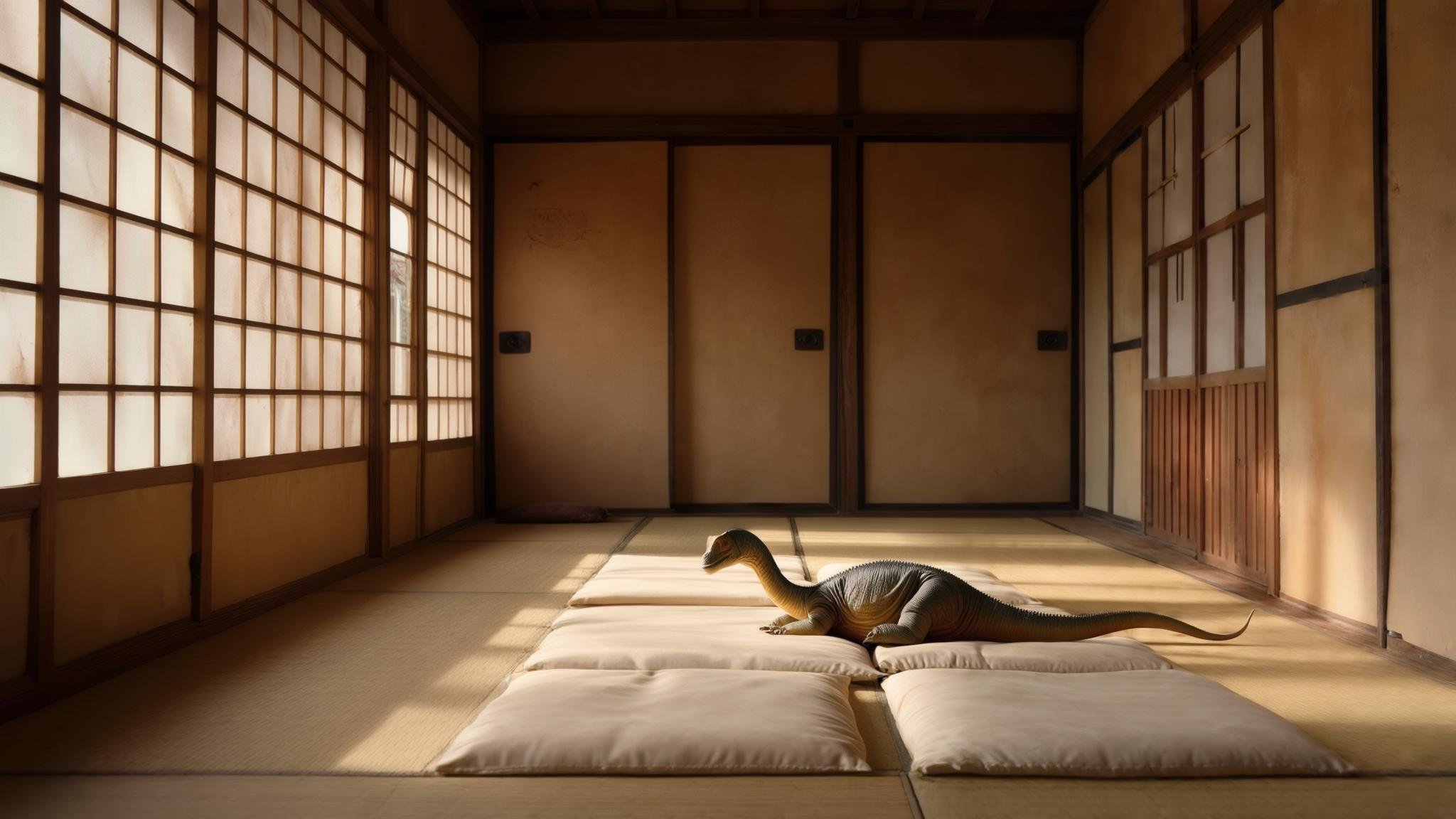
When you imagine living with a dinosaur, the first down-to-earth question is usually, “What kind of room could even house one?”
“My room is tiny—only 6 tatami mats. Is that enough?”
“Would the floor collapse in an apartment?”
“What if it escapes!?”
This chapter answers those concerns by explaining the space, structure, materials, and clever adjustments needed to safely and comfortably keep a dinosaur indoors.
✅ Can a Small Dinosaur Live in a 6-Tatami-Mat Room?
The biggest question is “space,” of course.
For example, tiny dinosaurs around 60 cm to 1 m in length—such as Psittacosaurus or Microraptor—could technically be kept in a 6-tatami (about 9.7 m²) studio apartment.
But there are important caveats.
◉ “It Fits” Doesn’t Mean “It Lives Comfortably”
For a human, living in a bathroom-size space all day would be stressful.
Likewise, “It fits in the room” is not the same as “It can live well.”
Ideally, you should ensure:
-
Movement space: about 2–3 m in all directions
-
Feeding area: mats to prevent floor damage
-
Rest area: a quiet corner or nest-like enclosure
Some small dinosaurs can also run or jump well, so vertical space is surprisingly important.
🧱 How Strong Does the Floor Need to Be?
A dinosaur’s weight and movement can place significant stress on flooring.
◉ How Much Pressure Are We Talking About?
Even a 30 kg dinosaur can create over 100 kg of impact force when jumping or sprinting.
Typical wooden floors in Japanese homes hold about 180–200 kg/m².
One dinosaur might be fine, but long-term vibration and concentrated weight can weaken flooring.
Recommended reinforcement:
-
Lay plywood sheets to distribute weight
-
Use thick carpets or shock-absorbing mats
-
Reduce heavy furniture to balance load
These measures help maintain safety while reducing long-term structural damage.
🧱 Wall Materials & Damage Risk from Claws, Horns, and Tails
Depending on the species, dinosaurs may have sharp claws, swinging tails, or even horns—all major risks to your walls.
◉ How to Protect Walls and Pillars
-
Install clear acrylic panels or protective sheets
-
Place cushions where horns or tails may hit
-
Use removable wall protectors to avoid rental penalties
These methods make it much easier to restore the room when moving out.
🚪 How to Prevent Escapes
Dinosaurs are smarter and more agile than many people think.
If one escapes, even a tiny species could cause chaos.
◉ Practical Escape-Prevention Measures
-
Add extra locks to doors
Sliding doors: auxiliary locks / Hinged doors: child locks -
Seal vents, windows, and gaps
Even small dinosaurs can slip through surprisingly narrow spaces. -
Attach a GPS tag
Lightweight pet-friendly GPS devices allow you to track escapees instantly. -
Set up indoor cameras
Monitor behavior and accidents while you’re out.
🏢 Keeping a Dinosaur in a Rental or Apartment
Perhaps the most important question: “Are dinosaurs even allowed in rentals?”
◉ Even “Pet-Friendly” Rentals May Not Allow Them
Most rental agreements only allow small dogs or cats.
So you’ll need permission from the landlord or property manager.
In such cases, choosing a dinosaur that can be treated as a “small exotic pet” is key.
Choosing a species under 10 kg, quiet, and low-risk makes negotiations far easier.
◉ Rental-Friendly Adjustments
-
Use sound-dampening mats to minimize noise
-
Do removable DIY protection for floors and walls
-
Limit your dinosaur to one dedicated room
🧰 Creating a Dinosaur-Friendly Room
✅ Essential Indoor Dinosaur-Care Checklist
-
Space
— Minimum 6 tatami (~9.7 m²), ideally 10+ tatami (~16 m²) -
Floor strength
— Ideally 200 kg/m²
— Add shock-absorbing mats or carpets -
Wall protection
— Acrylic panels or protective sheets -
Escape prevention
— Extra door locks
— Seal windows/vents
— GPS tracking for safety -
Noise control
— Soundproof mats
— Sound-insulating curtains -
Comfort conditions
— Adjustable lighting
— Humidity control
— Air circulation
✨ Summary: A Dinosaur Is “Family”—So Build the Room with Love
Keeping a dinosaur inside your home isn’t just romantic imagination—it involves real concerns like space, structure, floor strength, escape prevention, and neighbor relations.
Especially in rentals or apartments, clever use of limited space is key, and the responsibility on the owner becomes even greater.
That’s why proper preparation and thoughtful room design are essential for a happy dinosaur-human lifestyle.
Next, we’ll dive into “daily life”—feeding, toilet habits, playtime, bonding, and more.
Living with a dinosaur is a little like living with a dog or cat… but also completely different.
Get ready for the reality of “Dinosaur Life.”
🥩 Chapter 3: What Do Dinosaurs Eat? The Real Costs & Daily Feeding Differences Between Carnivores and Herbivores
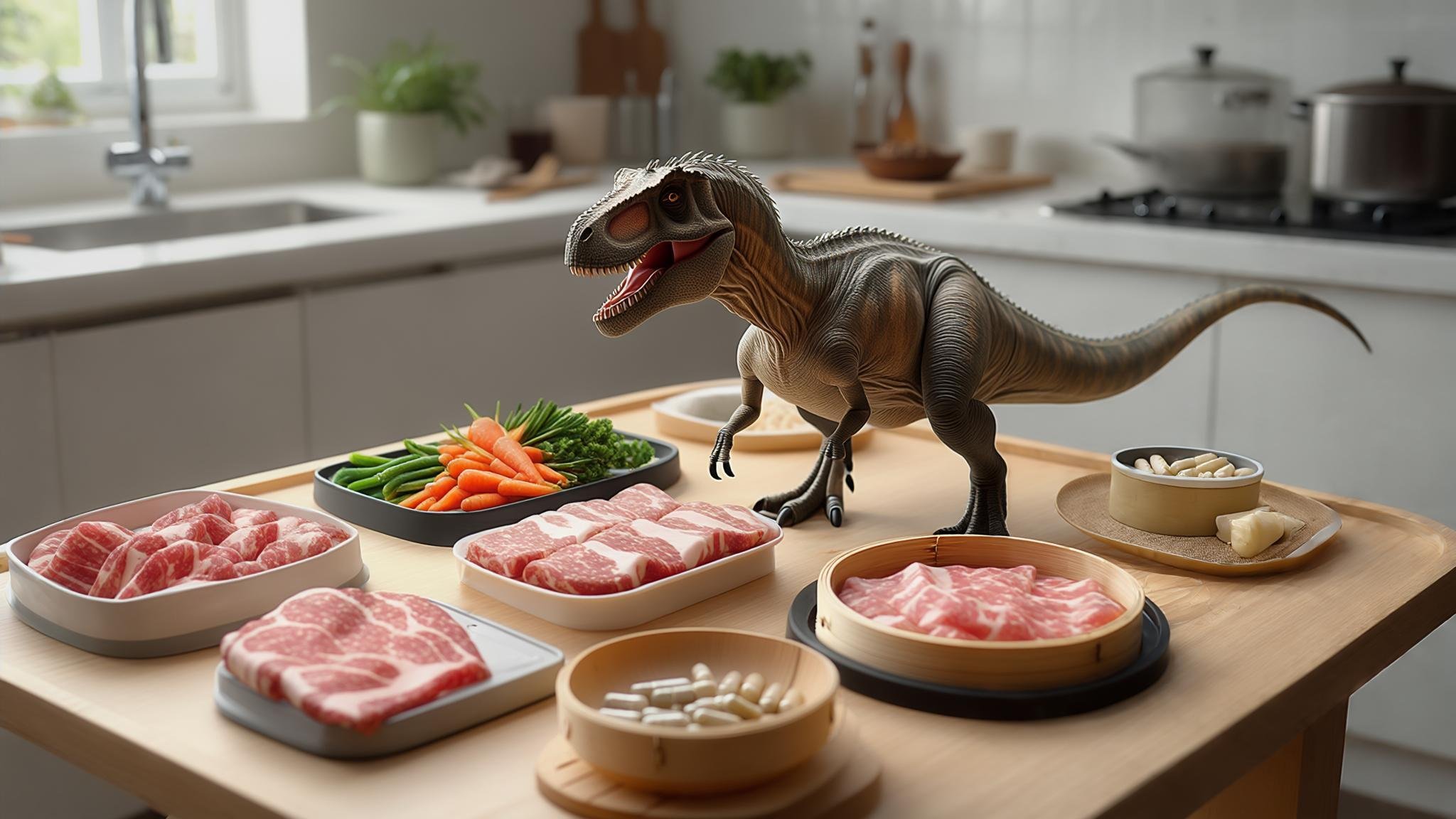
Thinking about living with a dinosaur—
it sounds like a dream, but quickly your mind jumps to questions like:
“What do they even eat?” “Is the food expensive?” “Won’t it smell?”
In reality, dinosaur diets are surprisingly complex and differ dramatically depending on whether they’re carnivores, herbivores, or omnivores.
In this chapter, we’ll explore feeding habits, food types, monthly costs, storage methods, and odor control—everything you need to know to manage dinosaur meals in everyday life.
✅ Dinosaurs Are Carnivores, Herbivores, or Omnivores
First, determine what *type* of eater your dinosaur is.
Just like dogs and cats, dinosaurs have diet rules based on their biology.
🦖 Characteristics of Carnivorous Dinosaurs
Examples: Velociraptor, Tyrannosaurus, Carnotaurus
-
Their main diet is raw meat.
-
They also eat small animals, poultry, fish, and organ meats like liver.
-
They need high-protein, high-calorie food; both quality and quantity matter.
Freshness is crucial. Leaving raw meat out leads to bad odors and hygiene problems.
🦕 Characteristics of Herbivorous Dinosaurs
Examples: Triceratops, Stegosaurus, Psittacosaurus
-
They prefer vegetables, leaves, fruits, and hay.
-
Celery, komatsuna, cabbage, and carrots are commonly used.
-
They eat a *lot*, so quantity over quality matters most for herbivores.
Still, vegetables alone aren’t enough—adding supplements helps maintain proper nutrition.
🦎 Characteristics of Omnivorous Dinosaurs
Some small dinosaurs (e.g., Oviraptor) likely had omnivorous habits.
-
They eat fruit, insects, small reptiles, seeds, and more.
-
Their diet is varied, making meal planning flexible.
-
However, the variety means more prep work for the owner.
Omnivores enjoy rotating menus—fruit today, mealworms tomorrow—keeping them stimulated and satisfied.
💰 How Much Does Dinosaur Food Cost? Monthly Cost Simulation
One of the biggest concerns is the monthly food budget.
Costs vary greatly depending on size and species, but here are approximate monthly estimates.
🦖 Carnivorous Dinosaurs (around 1 meter long)
Monthly food cost: approx. ¥9,700
-
🥩 Frozen chicken: 300g/day → ~¥5,000
-
🍖 Beef liver (2× per week): 200g × 8 → ~¥2,400
-
🐟 Fish (once a week) → ~¥800
-
💊 Supplements → ~¥1,500
💰 Total: approx. ¥9,700
🦕 Herbivorous Dinosaurs (around 1.5 meters long)
Monthly food cost: approx. ¥7,000–8,000
-
🥬 Vegetables (large quantities) → ~¥3,000–4,000
-
🌾 Hay → ~¥2,000
-
🍎 Fruits → ~¥1,000
-
💊 Supplements → ~¥1,200
💰 Total: approx. ¥7,000–8,000
Actual costs vary by region and supplier, but generally expect around ¥10,000 per month for small to mid-sized dinosaurs.
Medium-to-large dinosaurs can cost 2–5× more, so budgeting is essential before adopting one.
🧊 Food Storage & Odor Control
The biggest headache when feeding dinosaurs is food storage and smell.
In summer, food spoils quickly, making refrigeration and freezing essential.
◉ Refrigeration Tips (for carnivores)
-
Freeze meat and organs in small portions
-
Use within 24 hours after thawing
-
Use airtight containers to block odors
A separate mini-freezer makes hygiene easier by separating dino food from human food.
◉ Vegetable & Hay Storage (for herbivores)
-
Wrap vegetables in newspaper and store in the vegetable compartment
-
Keep hay in a dry, well-ventilated place
-
Mist lightly if overly dry
For odor control, use ventilated storage boxes + deodorizers for excellent results.
◉ Handling Food Waste
-
Dispose daily in a sealed trash can
-
Consider composting vegetable waste
-
Freeze raw-meat leftovers before disposal to drastically reduce odor
These steps alone help keep your home fresh and prevent issues with family or neighbors.
☝️ Do Dinosaurs Have Food Preferences?
Some paleontologists speculate that dinosaurs—even imaginary pet ones—might have likes and dislikes.
For example:
-
Herbivores avoiding citrus fruits
-
Carnivores preferring lean cuts over organ meats
-
Types that love gnawing on bird bones
Observing your dinosaur’s individual preferences is key.
“What makes them energetic?” “What do they leave untouched?”
Feeding time is a great way to strengthen your bond.
✨ Summary: A Dinosaur’s Health Starts With Your Food Choices
A dinosaur’s well-being depends on your creativity and attention.
Carnivores need high-protein, fresh meat; herbivores need volume and fiber.
Even small species tend to cost ¥7,000–10,000 per month.
With good food storage, odor control, and waste management, daily feeding becomes much more manageable.
Caring for a dinosaur is more realistic—and more enjoyable—than you may expect.
If you approach feeding with affection and curiosity, your dinosaur will surely grow to trust you.
In the next chapter, we’ll dive into daily life: toilets, routines, exercise needs, and more—
the real rhythm of “living with a dinosaur.”
💩 Chapter 4: Dinosaur Poop—How Much, How It Smells, and How to Clean It (A Complete Guide!)
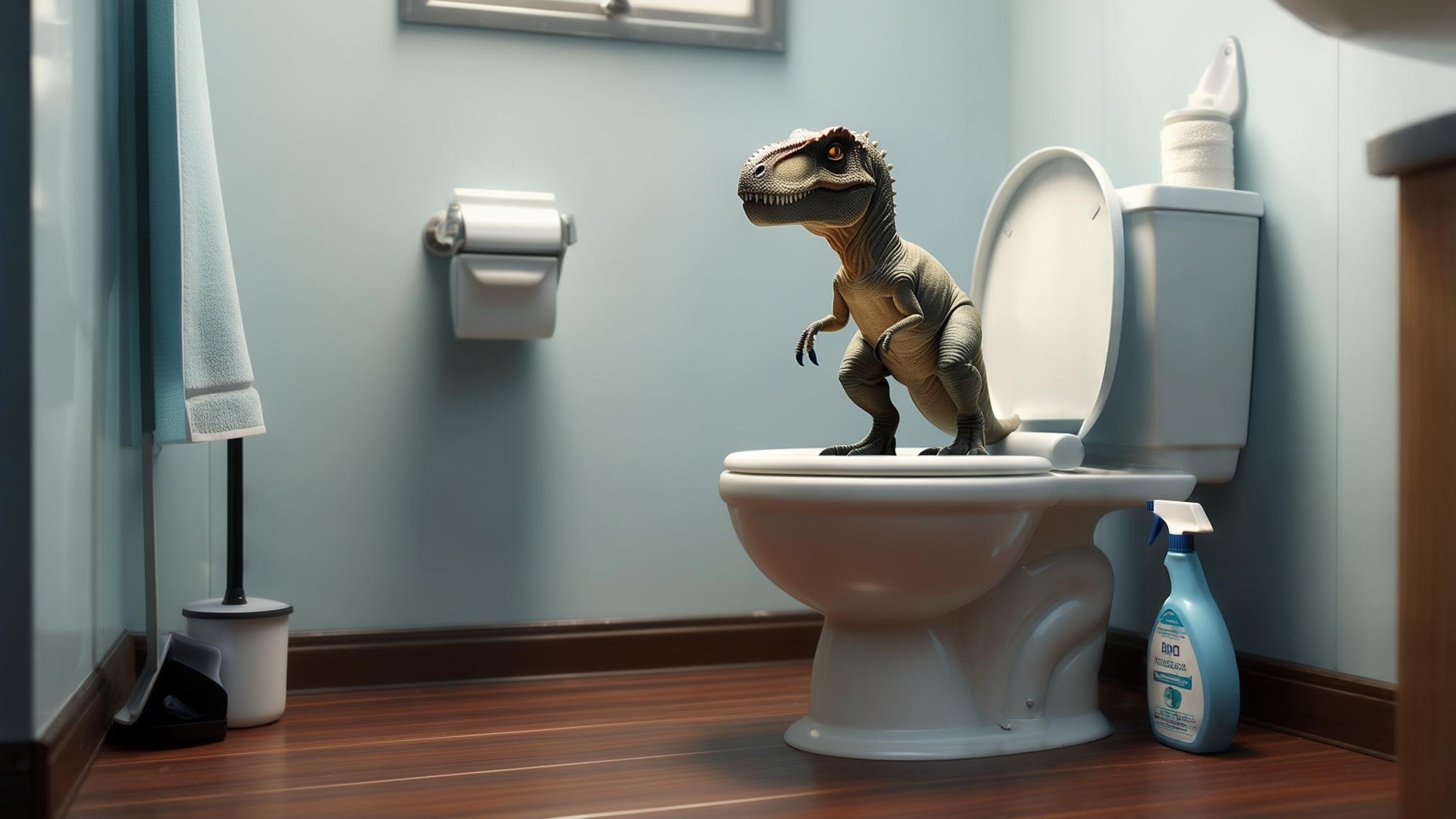
“How much do dinosaurs poop?”
“Will the house smell? Won’t cleaning be a nightmare?”
“Do bugs gather around it?”
If you’re keeping a dinosaur indoors, you can’t avoid the topic of *waste management*.
It’s practical, unavoidable, and directly affects your daily comfort—so you need to understand it well.
In this chapter, we’ll explain poop volume, smell control, indoor toilet setups, cleaning schedules, and useful tools—all from a real-life perspective.
🦖 How Much Do Dinosaurs Actually Poop?
One of the first concerns is: “How much comes out each day?”
Although it varies by species, diet, and size, here are typical estimates:
✅ Herbivorous Dinosaurs (Approx. 1.5 m Length)
-
1–1.5 kg of poop per day
-
Frequency: 2–3 times a day
-
Shape: firm pellet-type, similar to goats or rabbits
-
Smell: relatively mild, sometimes leafy or grassy
Herbivores eat a lot, so they produce a lot.
But fortunately, the smell is mild compared to carnivores.
✅ Carnivorous Dinosaurs (Approx. 1 m Length)
-
500–800 g of poop per day
-
Frequency: 1–2 times a day
-
Shape: soft with higher moisture
-
Smell: strong, similar to rotten meat
Carnivores poop less volume, but odor and hygiene issues are much more serious.
✅ What About Urine?
Many experts believe dinosaurs released waste similar to birds—
meaning urine is not fully liquid, but a whitish paste-like uric acid mixed with feces.
This makes floors dirty easily, so waterproof sheets and toilet trays are essential.
🧴 Odor & Insect Prevention—Ignoring This Is Dangerous
Left unattended, dinosaur poop doesn’t just stink—it attracts flies and gnats.
Effective odor control involves quick cleanup + the right prevention tools.
◉ Odor Control Tips
-
Use deodorizing sprays (pet-safe, natural ingredients)
-
Small air purifiers or deodorizing machines
-
Activated-carbon pet litter or mats
-
Wrap poop in newspaper or double bags before disposal
For carnivores especially, leftover food and urine combine to produce strong fermentation odors—
so fast cleanup is a must.
◉ Insect Prevention Tips
-
Clean waste every day
-
Seal trash bags with double layers
-
Place insect-repellent sheets inside the trash can
-
Use disinfectant wipes or cooling sprays in summer
Just a few precautions can drastically reduce insect problems.
🚽 Indoor Toilet Setup Ideas
“How do you make a dinosaur toilet indoors?”
This is a common question for new owners.
Here are methods indoor keepers often use in real practice:
✅ Basic Dinosaur Toilet Setup
-
Large pet sheet tray (large dog size is ideal)
-
Waterproof mat underneath (with newspaper)
-
Highly absorbent pet sheets
-
Optional: sprinkle a little cat litter on top
✅ Can You Train Dinosaurs to Use a Toilet?
Surprisingly, small dinosaurs can be toilet-trained.
-
Praise when they go in the right spot
-
Use a mat that carries their scent to guide them
-
Stay calm and simply clean up mistakes—never scold
With consistency, many individuals learn to use the same spot reliably.
✅ Example Cleaning Schedule
-
Every morning: remove waste (5–10 min)
-
Twice a week: wipe floors & disinfect around toilet
-
Once a month: wash toilet tray with baking soda or pet-safe detergent
Routine cleaning drastically reduces odors and insects.
🤖 Can You Use Automatic Cleaning Robots?
Today, there are many automatic litter robots and cleaning devices made for pets.
So can dinosaurs use them?
✅ Real Example: Small Dinosaur × Robot Cleaner
Owners have reported success using the following setup:
-
Robotic vacuums like Roomba or Eufy
-
Configured to clean only the toilet area
-
Run twice a day during quiet hours
It won’t pick up poop, but it keeps the area free of hair, dust, and scattered litter, improving overall hygiene.
✅ Other Useful Ideas
-
Combine robot cleaners with manual waste removal
-
Use trash cans with odor sensors
-
Set up indoor cameras to monitor while you’re away
Choosing appliances that reduce daily workload makes dinosaur care much easier.
✨ Summary: Cleanliness Is the Key to a Comfortable Dinosaur Life
Dinosaurs are adorable and full of charm, but caring for them requires effort.
Waste management is directly tied to smell, hygiene, sound, and insect prevention, so planning is crucial.
As discussed, you should:
-
Know the volume and odor characteristics
-
Prepare a proper toilet setup
-
Make cleaning routines consistent
-
Use helpful household gadgets
By following these four points, you’ll go from “I could never keep a dinosaur…” to
“Wait, maybe I *can* do this!”
In the next chapter, we’ll explore playtime, bonding, and stress relief—
essential tips for deepening your relationship with your adorable prehistoric companion.
🌡️ Chapter 5: Air Conditioning in Summer? Floor Heating in Winter? How to Create the Perfect Temperature & Humidity Environment for Your Dinosaur
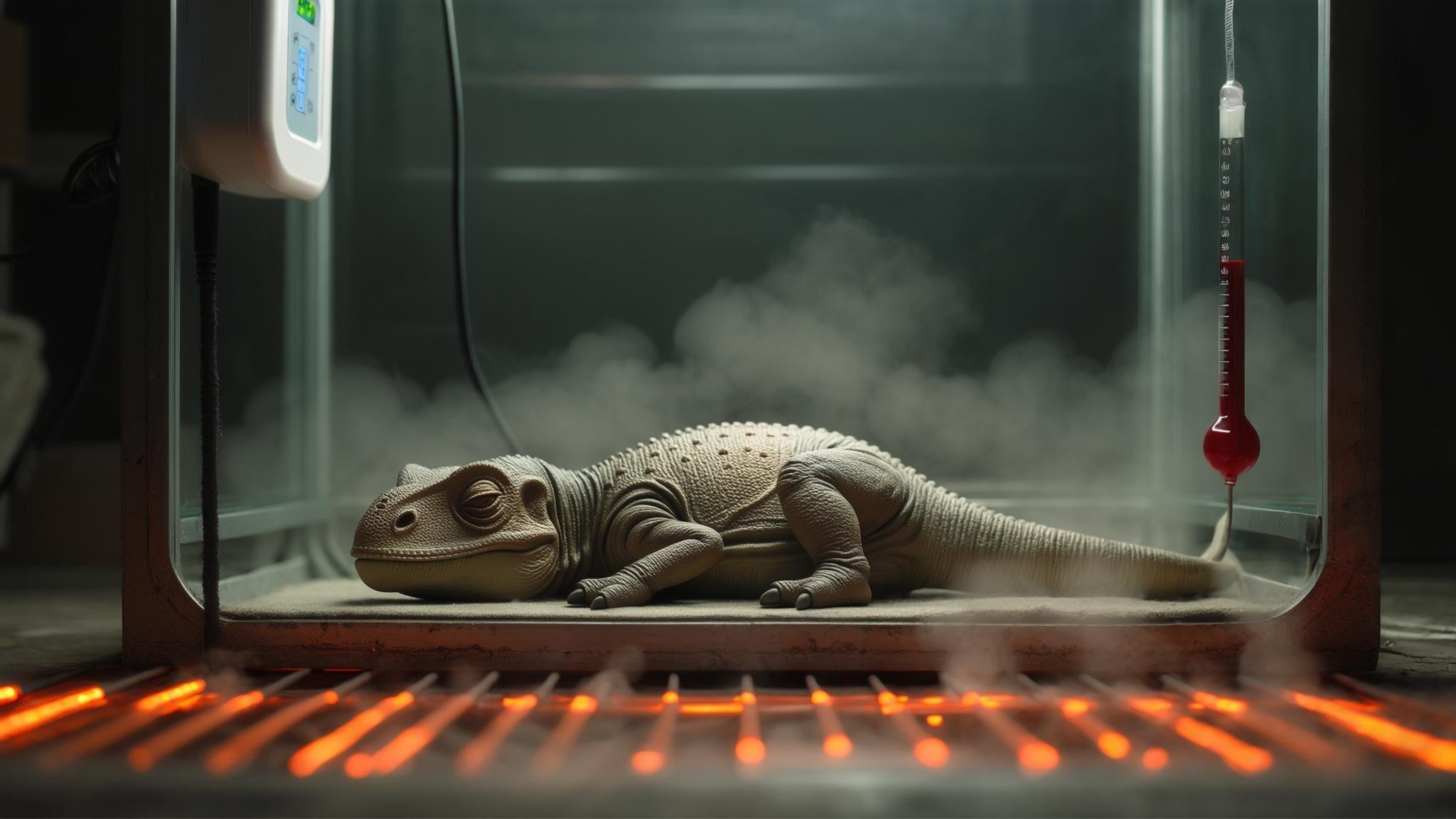
“Do dinosaurs prefer warm climates, or are they good with the cold?”
“Do I need air conditioning or heating?”
“Is humidity control really that important?”
These are very common questions. When considering indoor dinosaur care, temperature and humidity management is absolutely essential—because the slightest imbalance can affect your dinosaur’s health.
In this chapter, we’ll thoroughly cover ideal room temperature and humidity ranges, how to choose heating and cooling equipment, seasonal management tips, and easy regulation techniques even beginners can use.
🦖 Are Dinosaurs Cold-Blooded or Warm-Blooded?
First, let’s clarify whether dinosaurs could maintain their own body temperature.
This is still a topic of scientific debate, but modern research suggests the following:
✅ The Leading Theory: “Mesothermy” (Semi-Warm-Blooded)
Dinosaurs were likely neither fully cold-blooded like reptiles (which depend entirely on external temperatures) nor fully warm-blooded like mammals.
The dominant view is that they were mesothermic—able to maintain body heat to some extent, but still influenced by the environment.
This means indoor dinosaurs can still become ill if temperature or humidity levels are not properly managed.
🌤️ Ideal Temperature & Humidity for Dinosaur Comfort
So—what kind of environment helps dinosaurs live comfortably indoors?
This varies by species and size, but for small herbivores or carnivores, the general guidelines are:
🟢 Ideal Temperature
-
Daytime: 24°C–28°C
-
Nighttime: 22°C–25°C
A slight day–night variation of 2–3°C is ideal and mimics natural conditions.
💧 Ideal Humidity
-
Throughout the year: 50–60%
Below 40% can cause skin and respiratory dryness.
Above 70% encourages mold, bacteria, and skin diseases.
☀️ Seasonal Care: Summer Cooldown & Winter Heating
Let’s explore the best setup and techniques for each season.
🔥 Summer (June–September): Cooling & Air Circulation
-
Use air conditioning to keep the room around 26°C
-
Use fans or circulators to move air
-
Block direct sunlight with curtains
-
Use a dehumidifier if humidity exceeds 60%
As heatstroke prevention, cooling mats and chill plates are very helpful.
Give your dinosaur choices so it can pick its own comfortable spot.
❄️ Winter (November–March): Floor Heating & Warm Zones
-
Use heating to keep the room above 22°C
-
Floor heating is highly effective in cold seasons
-
Add heat mats or warm covers to their enclosure
-
Run a humidifier to prevent excessive dryness
Creating warm and cool zones (“temperature gradients”) helps your dinosaur choose where it feels best.
🛠️ Easy Temperature & Humidity Management for Beginners
Worried that all of this sounds complicated?
Don’t be—there are many simple methods to get started.
Here are beginner-friendly ideas:
✅ Basic Equipment Checklist
-
Digital thermometer/hygrometer (from around ¥1,000)
-
Air conditioner with energy-saving mode
-
Humidifier (ultrasonic recommended)
-
Small dehumidifier (essential for summer/rainy season)
-
Curtains & insulation sheets
With just these, you can already create a very stable indoor habitat.
✅ Techniques for Reducing Temperature Variations
-
Use circulators to eliminate “stagnant air zones”
-
Measure temperature at multiple heights inside the enclosure
-
Avoid placing enclosures near windows or walls
Dinosaurs, like humans, feel stress when temperatures are too high or low.
Finding a balance that works for both you and your dinosaur is key.
🧠 Dinosaurs Are Extremely Sensitive to Environmental Changes
Dinosaurs can be surprisingly delicate—even small changes can affect their health. For example:
-
Sudden drops in temperature can cause cold-like symptoms
-
High humidity leads to skin issues and mold growth
-
Excessive dryness causes dehydration and breathing issues
That’s why your eyes and awareness are the most important “equipment.”
Noticing small changes—“seems less active today,” “not moving much”—
is the first step to protecting your dinosaur’s well-being.
✨ Summary: A Comfortable Habitat Deepens Your Bond
Dinosaurs are highly affected by indoor temperature and humidity.
Which means your effort can dramatically improve their quality of life.
-
Aim for ~26°C daytime, ~23°C nighttime
-
Keep humidity at 50–60%
-
Think beyond AC/heating—airflow and humidity matter too
-
Create seasonal “comfort zones” for your dinosaur
-
Above all, daily observation is the most powerful form of care
By incorporating these tips little by little, your dinosaur will relax and open its heart to you.
In the next chapter, we’ll explore communication, play, and trust-building—
the keys to deepening the bond between you and your prehistoric companion.
🎾Chapter 6: Can Dinosaurs Play? 7 Tips for Training and Communicating!
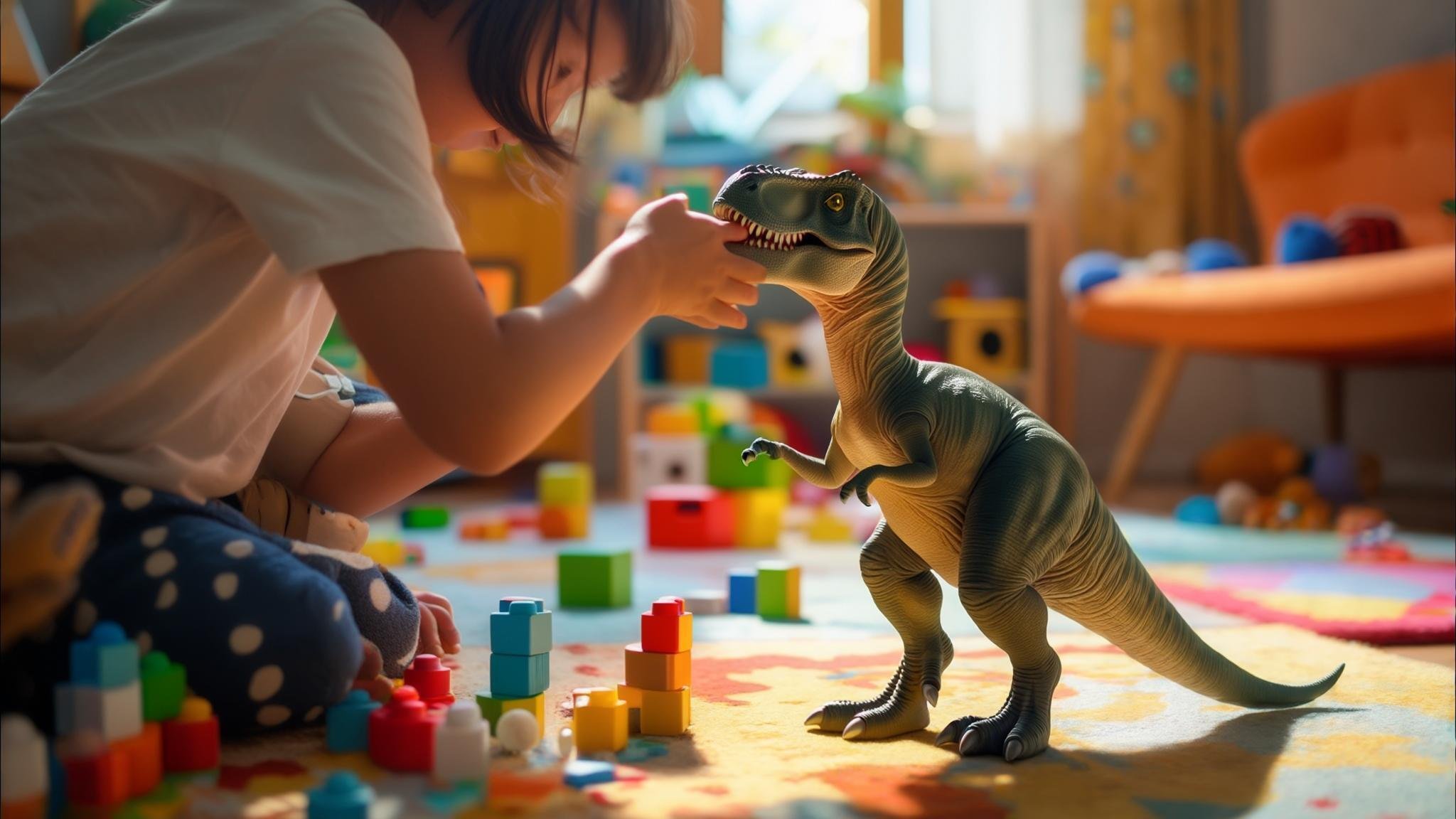
“Do dinosaurs play with toys?”
“Can they be trained? Will they listen to what I say?”
“If I call their name, will they come? Or even respond?”
In this chapter, we dive into how to interact with dinosaurs in daily life and how to deepen your emotional bond with them.
After learning about housing, feeding, and toilet habits, we finally get to explore “the fun part” of living with dinosaurs.
It’s not just about “keeping” a dinosaur—when you can actually “connect” with them, your life together becomes far richer and more meaningful.
🎲Do Dinosaurs Need Toys? How Do They Play?
One of the first questions people ask is, “Do dinosaurs actually play?”
The answer is YES—play is extremely important for small dinosaurs.
Just like modern animals, dinosaurs need stimulation and enrichment.
Indoor dinosaurs can’t roam freely outside, which means they’re more prone to stress and lack of exercise. If neglected, they may even develop behavioral issues.
✅ Recommended Toys for Dinosaurs
-
Rolling treat balls
Fill them with treats—dinosaurs will chase and roll them to get the food. Stimulates curiosity for both herbivores and carnivores. -
Durable chew toys
Dinosaurs love to bite. This relieves stress and protects your furniture—especially useful for young dinosaurs with a strong chewing instinct. -
Hanging play equipment
Fixed to the wall or cage so dinosaurs can nudge or pull it. Helps prevent a monotonous routine. -
DIY toys like cardboard mazes
Easy and cheap—and dinosaurs won’t get bored if you change the layout regularly.
✅ How Often and How Long Should Dinosaurs Play?
-
20–30 minutes a day of interactive play is ideal.
-
Including solo exploration time, at least 1 hour of free movement per day is recommended.
Dinosaurs are especially active in the morning and evening. Setting a fixed daily playtime helps establish a healthy routine.
📣Can Dinosaurs Be Trained? Will They Bite If Scolded?
“Can dinosaurs be trained?”
“If I scold them, will they get angry and attack?”
The answer: It depends on species and temperament, but training is possible.
✅ Dinosaur Types That Learn Easily
-
Small herbivores (e.g., Hypsilophodon-types) are gentle and eager to learn.
-
Even carnivores raised from babyhood can build strong trust with humans.
The key is never shouting or hitting—always teach calmly and consistently.
✅ Tips for Training
-
Ignore failures, praise successes
This alone drastically improves learning speed. -
Use sound to get their attention
Clap hands or tap the floor to signal “No”. -
Use food rewards
Even small achievements deserve treats.
✅ What Happens When You Scold Them?
Depending on how you scold them, dinosaurs may be startled and run away—or react defensively and bite.
Rather than “scolding,” it’s safer to ignore unwanted behavior so it naturally fades.
👂Will They Come When Called? Do Their Calls Count as Replies?
“My dinosaur chirps ‘kyuu!’ when I call its name.”
This is surprisingly common.
Dinosaurs are believed to have high social intelligence and communication skills.
✅ Can They Learn Their Name?
-
Many dinosaurs show recognition after 2–3 weeks of consistent name-calling.
-
Use pattern learning: calling their name → making eye contact → giving food.
Short and catchy names (e.g., “Coco,” “Rapp”) are easier for them to remember.
✅ Their Calls Might Be “Replies”
Certain vocalizations appear to serve as communication signals.
For example:
-
Before meals: “Kyurukyuru” = anticipation
-
When called by name: “Grru” = acknowledgment
-
When upset: “Sha!” = warning
Over time, you’ll begin to notice your dinosaur’s unique emotional expressions.
🤝Building Trust Through Daily “Little Interactions”
Playing with toys, calling their name, gentle touch—small daily actions gradually build trust.
Especially effective habits include:
-
Morning greetings
-
Slow blinking when making eye contact (dinosaurs do this too!)
-
Gently brushing with soft grooming tools
-
Saying “thank you” after playtime
Just like with human babies, it’s important to “express even when you’re not sure they understand.”
✨Conclusion: Play and Training Deepen Your Bond With Dinosaurs
This chapter explored how to build a deeper emotional bond with your dinosaur:
-
Toys reduce stress and enrich daily life.
-
Training works best when you praise—not punish.
-
Many dinosaurs learn their names; their calls may be meaningful.
-
Daily interactions gradually build deep trust.
Dinosaurs, just like humans, are emotional beings.
Even if words don’t align, hearts can connect—and when they do, the joy is immeasurable.
⏳Chapter 7: How Long Do Dinosaurs Live? Planning Their Life Span and Preparing for Senior Care
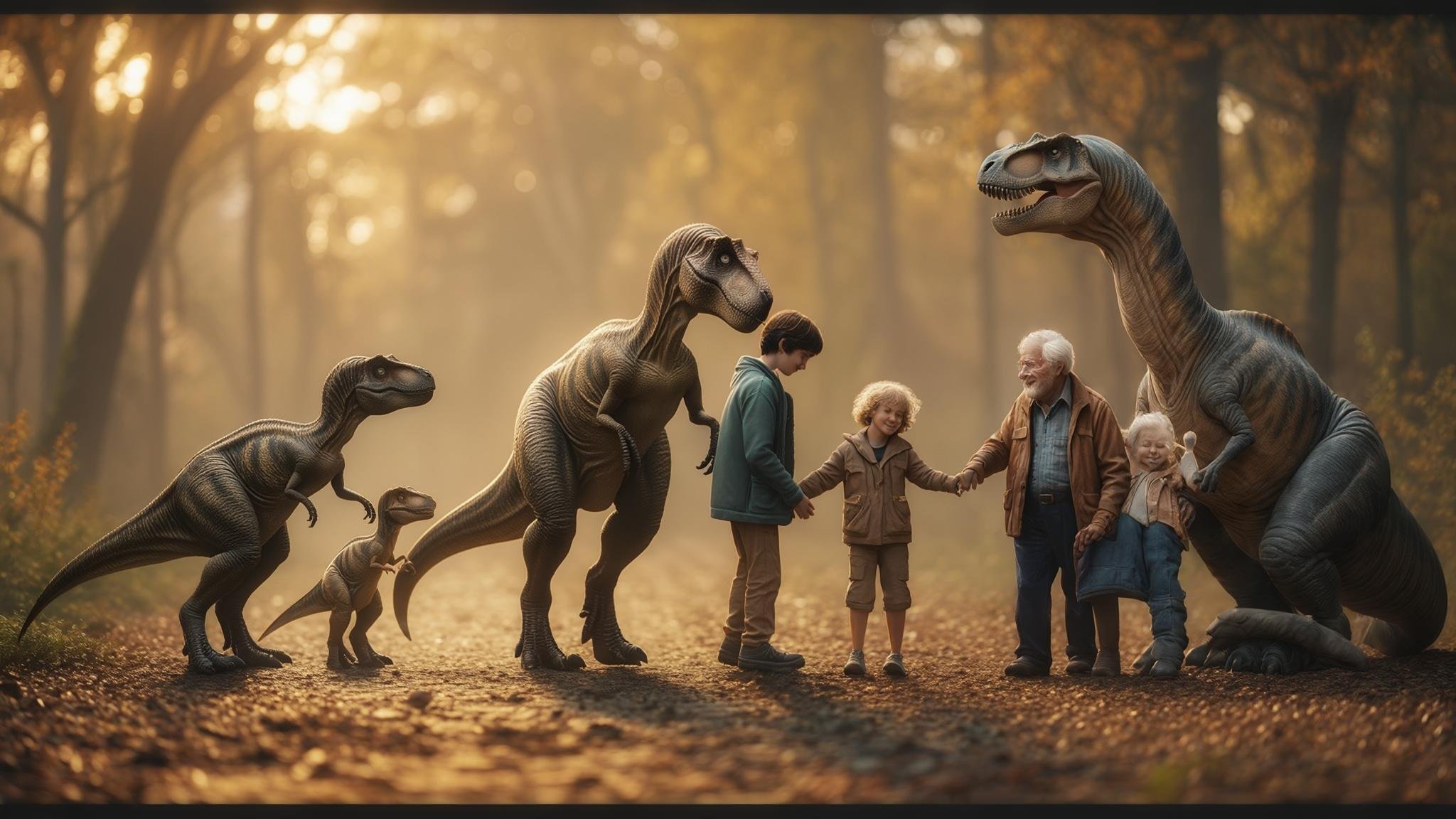
“How long do dinosaurs live?”
“I heard they’re long-lived, but… how long exactly?”
“Is it possible that I’ll have to care for them into my child’s generation?”
When considering life with a dinosaur, one topic you must face is their lifespan and long-term life planning.
You’ve learned about play, feeding, and creating a suitable environment—
now it’s time to think about the inevitable “farewell” someday, and deepen your understanding of how to design a life plan alongside your dinosaur.
Having a living creature means taking responsibility until the very end.
That’s why it’s important to imagine how you’ll walk through a potentially long future with your companion.
📅Do Dinosaurs Live Longer Than Dogs and Cats?
Yes. Depending on the species, many dinosaurs are expected to live far longer than dogs or cats.
Here are some estimated lifespans for common dinosaur types based on hypothetical indoor care models.
✅Estimated Lifespans of Common Dinosaurs (Indoor Care Assumed)
-
Small herbivores (e.g., Hypsilophodon): 25–35 years
-
Medium carnivores (Utahraptor types): 30–40 years
-
Feathered, bird-like dinosaurs (e.g., Microraptor): 20–25 years
These are hypothetical estimates, but compared to mammals, dinosaurs are generally long-lived.
From these numbers, you can see that keeping a dinosaur is less like having a “pet” and more like welcoming a lifelong family member.
In some cases, you must also consider that they may outlive you.
🧒Will My Children Need to Continue Caring for Them?
As mentioned, some dinosaurs can live close to 40 years.
If you start raising one in your 30s, you may reach your 70s by the time its life ends.
If you begin even younger—say, in your teens—there is a real possibility that your children or grandchildren may need to inherit the responsibility.
✅Not a “Pet,” but a Partner Across Generations
For this reason, consider the following points before bringing a dinosaur into your life:
-
Discuss the decision with your family and plan to raise the dinosaur together
-
Prepare a “care inheritance notebook” in case something happens to the primary caretaker
-
Share and document care routines to ensure long-term continuity
Even today, long-lived pets like parrots and tortoises are often included in wills overseas.
For dinosaurs, planning for succession is an entirely realistic and necessary step.
🧓The Reality of Aging and Senior Care
As dinosaurs age, they begin to show visible signs of aging.
Recognizing and responding to these changes is essential for a long, fulfilling life together.
✅Common Signs of Aging in Dinosaurs
-
Slower movement (weakened legs and hips)
-
Reduced vocalizations (lower energy)
-
Eating less (declining digestive function)
-
Changes in elimination patterns (kidney or intestinal changes)
If you notice these signs, adjust their lifestyle—reduced exercise, softer foods, and gentler routines.
✅Steps for Senior Dinosaur Care
Senior care becomes smoother if you prepare the following:
-
Reduce steps and install ramps
-
Use non-slip mats
-
Increase heating to prevent body cooling
-
Conduct weekly health checks (weight, stool condition, etc.)
Senior care is physically and emotionally demanding—but a deep bond makes the journey comforting for both.
💰How Much Do Senior Care Costs Add Up To? Can They Get Insurance?
With aging comes potential needs such as veterinary visits, supplements, and specialized care equipment.
Here’s a rough estimate of monthly senior-care expenses:
✅Monthly Senior Care Cost Examples (Small Dinosaurs)
-
Supplements & nutrition boosters: ¥1,500–¥3,000
-
Veterinary care or home visits: around ¥5,000 per 1–2 visits
-
Care equipment (ramps, heating units): ¥10,000+ initial cost
Recently, some insurance plans for exotic pets cover part of medical costs for around ¥1,000–¥2,000 monthly.
🌈Staying Together Until the Very End
“I want to stay with this little one until their final day.”
If you have that feeling, you can overcome any challenge.
A dinosaur’s long life brings countless memories.
When the dinosaur you raised from childhood quietly leans against you in old age,
you will truly realize the depth of your bond.
✨Conclusion: Design a Life Plan With Your Dinosaur
-
Dinosaurs live 25–40 years—longer than most common pets
-
You may need a multi-generation care plan
-
Don’t overlook signs of aging—adjust their environment accordingly
-
Senior care is challenging, but strengthens the bond
-
Preparing insurance and support systems early provides peace of mind
Life with dinosaurs is not only fun—
it teaches us the profound meaning of living alongside another life.
🏥Chapter 8: What If Your Dinosaur Gets Sick? Insurance, Medical Costs, and the Reality of Veterinary Care
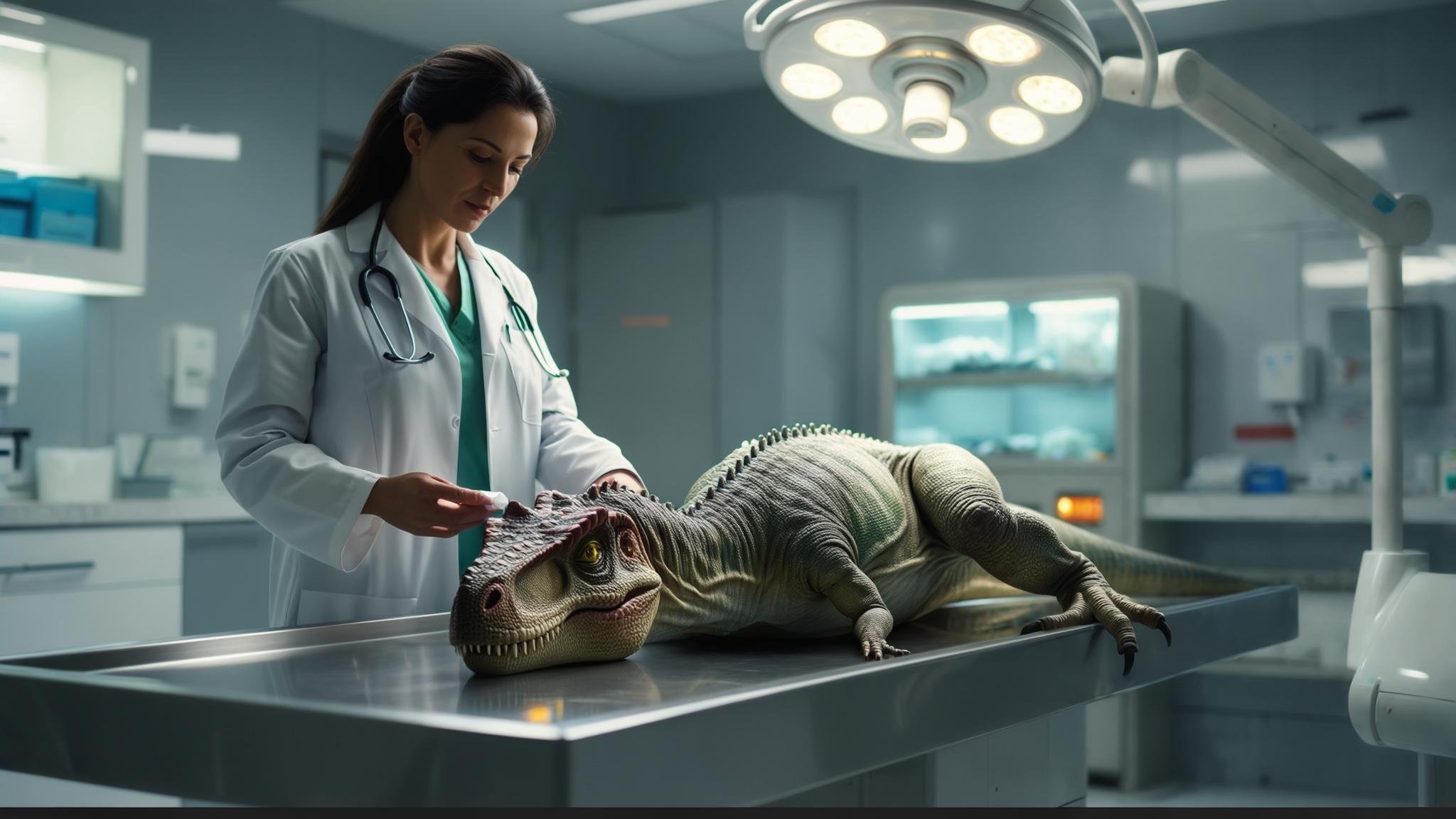
“My dinosaur is limping…”
“They haven’t been eating well lately…”
“But is there even a vet that can treat dinosaurs?”
When the unexpected happens, the biggest challenge as an owner is often figuring out how to deal with illness or injury.
For a rare creature like a dinosaur—especially one kept indoors—the limited information and higher hurdles for treatment can be a major source of anxiety.
This chapter aims to ease those concerns by introducing concrete details about dinosaur healthcare options, insurance systems, and realistic treatment costs.
🏥Do Dinosaur Specialists Even Exist?
To put it simply, Japan currently has no “dinosaur specialists.”
However, veterinarians who specialize in reptiles or birds—species anatomically closer to dinosaurs—may be able to provide some level of care.
✅Animal Hospitals Likely to Accept Dinosaur Patients
-
Exotic animal hospitals
Clinics that treat rabbits, ferrets, turtles, and iguanas may be willing to examine dinosaurs as well. -
Bird specialists
For feathered dinosaurs or bird-like species, avian vets can often provide useful expertise. -
University-affiliated veterinary hospitals
They may accept cases for research or observation. Advance consultation is required.
Still, because dinosaurs do not exist in reality, no “true expert” can exist either—and it’s important to prepare with that in mind.
What you *can* do is establish a regular clinic beforehand and visit periodically for checkups and basic examinations.
💰How Much Does Treatment Cost? Can They Even Use an MRI?
One of the biggest questions is, “How much will treatment actually cost?”
Let’s simulate some possible scenarios.
✅Estimated Treatment Costs by Case
● Minor injuries (cuts, bruises)
-
Initial exam + cleaning/treatment: ¥3,000–¥6,000
-
Oral medication: ¥1,500–¥2,500
● Digestive issues (poor appetite, diarrhea)
-
Stool test & blood test: ¥4,000–¥7,000
-
IV fluids + medication: around ¥5,000
● Fractures or internal disorders (severe cases)
-
X-ray: ¥3,000–¥4,500 per scan
-
MRI using human machines: ¥20,000–¥40,000
※Some dinosaurs may not physically fit inside MRI machines. Always confirm in advance.
● Surgery (intestinal blockage, major wounds)
-
Minor surgery starts at around ¥50,000
-
Hospitalization: an additional ¥20,000–¥30,000 per day
As you can see, dinosaur treatment tends to be more expensive than typical pets.
This is because equipment must be adapted for unusual body types, and medication or treatments are often semi-customized.
🛡Can Dinosaurs Be Insured? What Are the Costs?
Pet insurance has expanded rapidly in recent years, but dinosaurs are still far from a mainstream category.
However, some companies now offer coverage under “exotic animal insurance,” which may include certain small dinosaurs.
✅Potential Requirements for a Dinosaur to Qualify
-
Small size (under 1 meter in length)
-
Must be treatable at a partnered hospital
-
Proof of purchase or transfer certificate
✅Example of Insurance Fees & Coverage (Hypothetical)
-
💰 Monthly premium: ¥1,500–¥2,500
-
🏥 Outpatient coverage: Up to ¥10,000 per day
-
🛏 Hospitalization coverage: Up to ¥15,000 per day
-
🔧 Surgery coverage: Twice per year, up to ¥100,000 per procedure
※These estimates are based on insurance for tortoises and ferrets.
Actual dinosaur coverage would require case-by-case consultation.
📋Prepare Ahead: Create an Emergency “What If Notebook”
Medical emergencies often strike too quickly for you to gather information.
That’s why creating a “What If Notebook” as soon as you bring home your dinosaur is essential.
✅What to Include in Your Dinosaur Emergency Notebook
-
Species, personality, medical history
-
Diet details and any allergies
-
Contact information for emergency animal hospitals
-
Insurance policy number and coverage details
-
Emergency contacts besides the owner
You can write it on paper and stick it on your refrigerator or keep it in your phone notes for quick access.
If something happens to the owner, this allows others to respond immediately.
🌟Conclusion: Preparation Matters Because Dinosaurs Are Living Beings
This chapter explored dinosaur illnesses, treatment costs, and available insurance systems.
-
No dinosaur-specific hospitals exist, but exotic animal clinics may accept them
-
Treatment costs range from a few thousand yen to tens of thousands depending on severity
-
Some exotic animal insurance may cover small dinosaurs—advance consultation essential
-
A “What If Notebook” is key for emergency preparedness
Owning a dinosaur is not just about enjoying their presence—it means taking responsibility for their life.
And that responsibility is part of the pride—and the determination—of living side by side with a dinosaur.
🐶🐱Chapter 9: Can Dinosaurs Live with Dogs and Cats? A Complete Guide to Multi-Pet Households
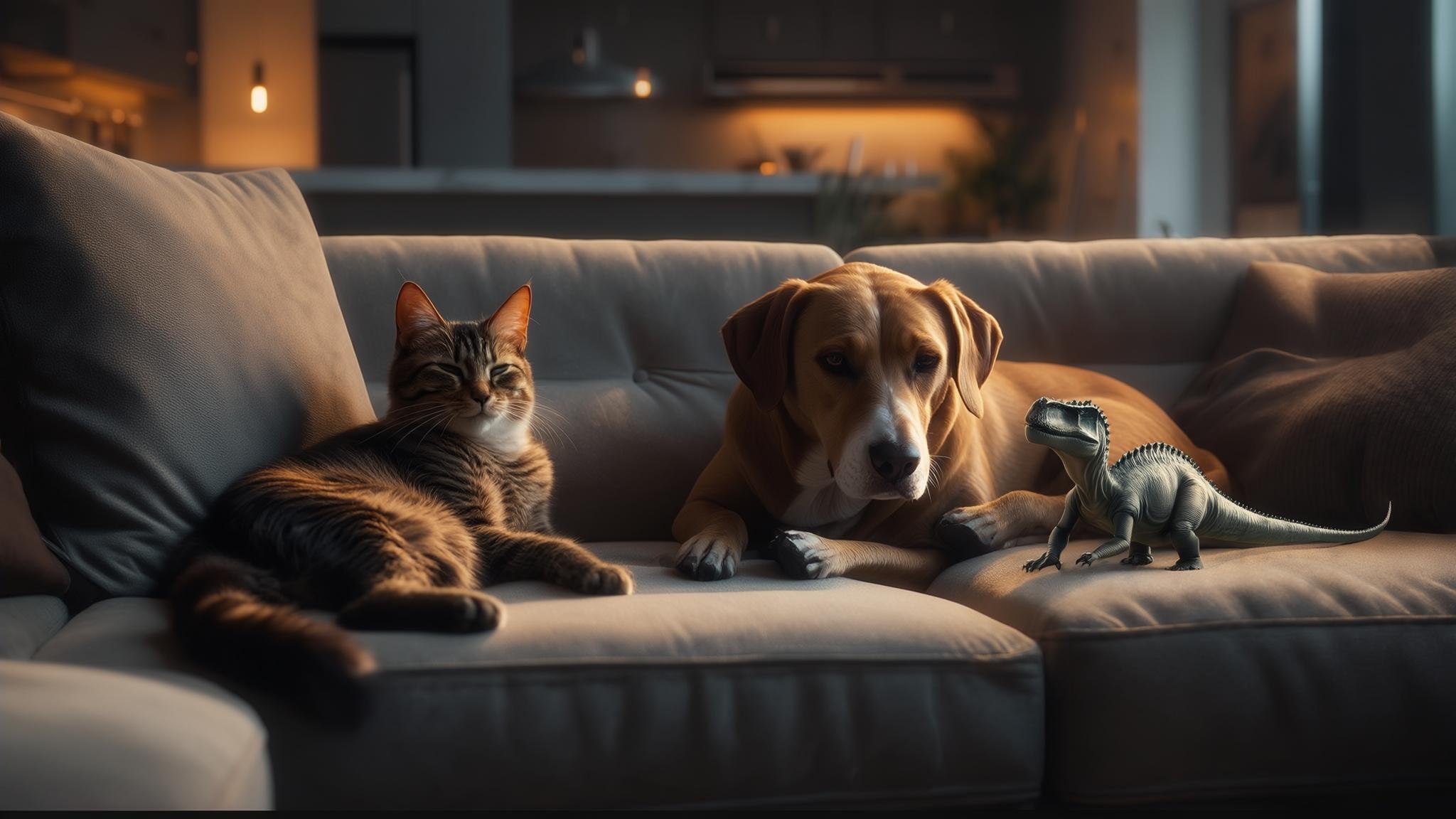
“I want to live with a dinosaur. But I already have a dog. And a cat.”
This situation is more common than you might think.
Even if you choose the extraordinary path of keeping a dinosaur, you don’t want to disrupt the bond you’ve built with your current pets.
But is peaceful coexistence between dinosaurs and dogs/cats really possible?
In this chapter, we focus on “multi-pet living” with dinosaurs, exploring compatibility, conflict prevention, and rules for harmonious coexistence.
🐕🦖Checking Compatibility Between Dinosaurs and Dogs/Cats
The first thing everyone wonders about is compatibility.
In reality, it depends greatly on the dinosaur’s species and personality.
✅Traits of Dinosaurs That Usually Get Along Well
-
Gentle, curious herbivores (e.g., Protoceratops types)
-
Small-bodied and not too fast (less likely to scare dogs/cats)
-
Not overly sensitive to sound (won’t panic at barking)
On the other hand, carnivorous dinosaurs or overly nervous species may not be suited for cohabitation with dogs or cats.
✅Pay Attention to Your Dog or Cat’s Personality Too
-
For dogs: those with a moderate sense of territory coexist more easily.
-
For cats: timid or highly independent cats may feel stressed more easily.
Pets with similar personalities don’t always get along.
What truly matters is creating a comfortable distance where they can accept each other’s differences.
💥Three Ways to Prevent Sudden Fights
Even if compatibility seems good, things rarely go perfectly from the start.
The key is how you manage the very first meeting.
🟡① Always Introduce Them “Through a Barrier” First
During the first few days, keep them completely separated with a cage or playpen.
-
No sudden close contact
-
Let them smell each other from a distance
-
Help them get used to movements and sounds
Give them time to recognize each other as “not a threat.”
🟡② Never Feed Them at the Same Time
Mealtime brings out strong instincts.
If another animal is nearby, territorial fights may erupt.
-
Separate feeding areas
-
Clean up immediately after eating
-
Don’t let pets approach each other’s bowls
This is the golden rule for avoiding food-related conflicts.
🟡③ Supervise Them Carefully
Even if they seem to get along, accidents often happen when owners aren’t watching.
-
Always supervise when sharing a room
-
Separate them when you leave home
-
Reduce items that may cause injuries (toys, bowls, etc.)
Proper safety management is essential for a stress-free cohabitation.
🔊Set Clear Rules for Managing Noises
A surprisingly common issue is “noise.”
Depending on the species, a dinosaur’s vocalizations can be louder than a dog’s bark.
✅Tips to Avoid Noise-Related Conflicts
-
Learn their vocalization patterns (dawn, pre-meal chirps, etc.)
-
Strengthen soundproofing (curtains, mats, panels)
-
Explain and prepare neighbors just in case
Sometimes a chain reaction happens—dog barks → dinosaur vocalizes → cat panics.
Understanding that sounds trigger other pets helps you set realistic rules.
📚Do They All Need Common Training Rules?
Yes—dinosaurs also need training, especially for multi-pet households.
✅Define “Behaviors You Don’t Want”
-
Too much vocalizing → reward quiet behavior
-
Chasing others → separate immediately
-
Invading feeding zones → teach a clear “stop” cue
Training works best when you reward desired behavior rather than punish unwanted actions.
Shared rules across all pets reduce stress and help maintain harmony.
🏠Creating Separate Safe Zones
Physically separating spaces is also key to successful coexistence.
✅Recommended Layout Examples
-
🟩 Dinosaur Zone: cool, sound-controlled area with strong flooring
-
🟦 Dog Zone: active space with bedding
-
🟨 Cat Zone: access to high places like cat towers or windowsills
If each has a “safe place,” you don’t need to force interactions.
A comfortable distance is the key to long-term harmony.
🧭Summary: Coexistence Is About “Peaceful Distance,” Not Forced Friendship
-
Dinosaurs can coexist with dogs and cats depending on personality and environment
-
Introduce them gradually through barriers
-
Be cautious with food, noise, and territorial behavior
-
Unified training rules and noise management improve comfort
-
Dedicated safe zones ensure security and reduce stress
Multi-pet households require extra care, but when done well,
your dinosaur, dog, and cat can enrich each other’s lives in wonderful ways.
Coexistence doesn’t mean forcing everyone to be best friends.
It means understanding differences and building a peaceful, sustainable distance.
And that may be the path to happiness for you and all your beloved companions.
📌Chapter 10: Are Dinosaur Calls Loud? A Complete Guide with Escape Prevention Tips & Checklists!
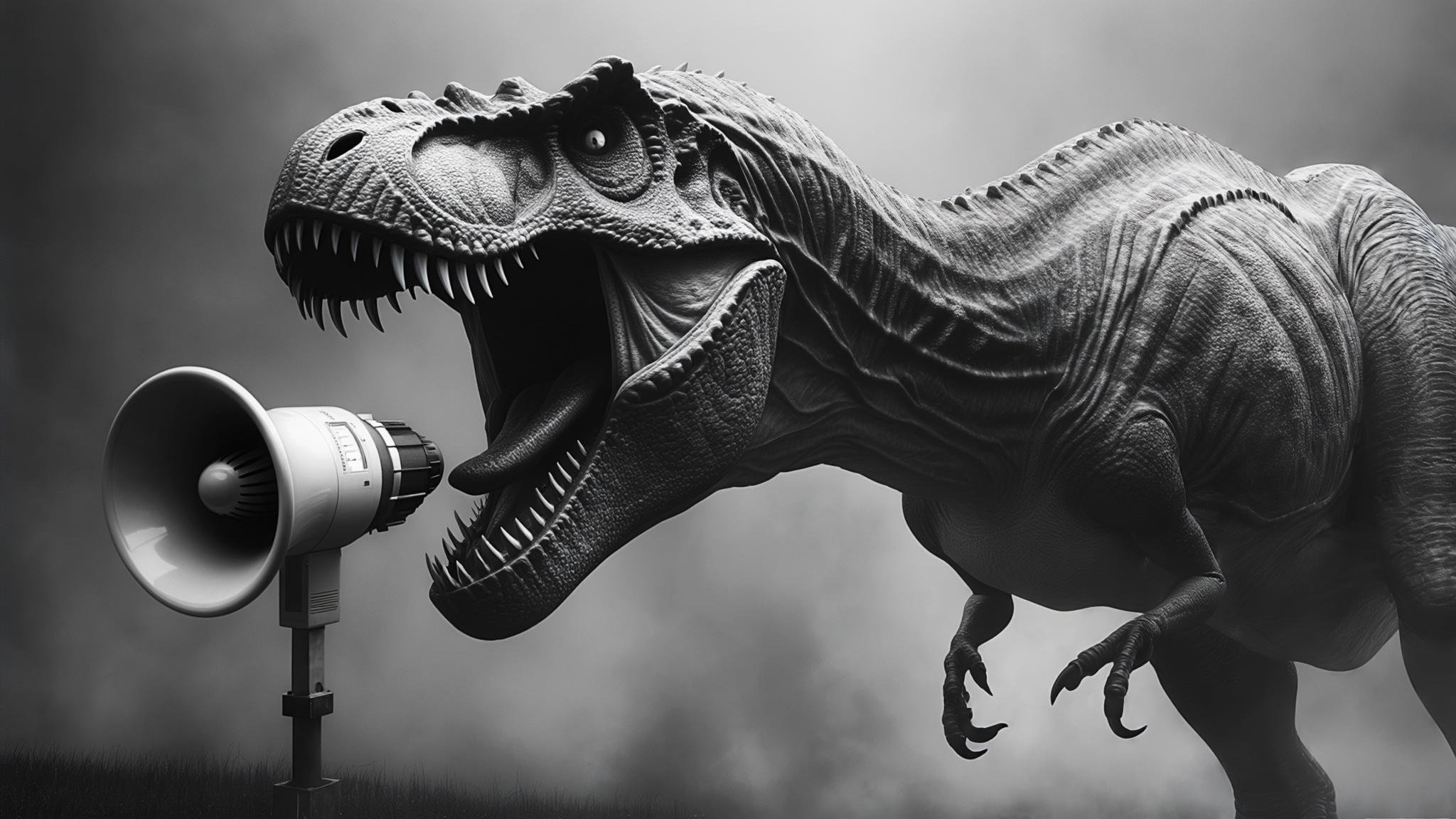
Who would’ve thought that the idea of keeping a dinosaur indoors could feel this realistic?
If you’ve read up to this point, you may already be imagining the entire process—from permits and home prep to feeding, toileting, training, and medical care.
And yet, when it comes to actually keeping one, there are always those “little things” you’ll still wonder about.
In this chapter, we dive into three of the most commonly asked detailed concerns.
🔊1. How Loud Are Dinosaur Calls? Louder Than a Jet Engine?
One of the most frequent questions is: “What does a dinosaur’s call sound like?”
Unfortunately, fossils don’t preserve exact vocal sounds, so we don’t know for sure.
However, based on their closest living relatives—birds and crocodiles—and vocal structure research, we can make educated estimates.
✅Estimated Decibel Levels from Studies & Simulations
-
Small dinosaurs (around 1m long)
→ Approximately 70–80 dB: similar to a barking dog or vacuum cleaner -
Medium dinosaurs (2–3m long)
→ 90–100 dB: comparable to a train interior or lawnmower -
Large dinosaurs (5m+)
→ 110–120 dB: approaching jet engine takeoff levels (≈120 dB)
Hearing this, many people think, “Wait… wouldn’t keeping one indoors be impossible?”
You’re absolutely right—soundproofing becomes a major priority.
🔇Recommended Noise Control Measures
-
Install thick sound-absorbing panels on walls (5cm or more recommended)
-
Reduce echoes using soundproof curtains and carpets
-
Study your dinosaur’s vocalization patterns and adjust routines accordingly
-
Create a dedicated soundproof indoor enclosure
Since you’ll be sharing a home, maintaining good relationships with neighbors and family is essential.
Noise control should be seen as an investment for peaceful coexistence.
🦖2. What If Your Dinosaur Escapes? Emergency Response Manual
“My dinosaur escaped from the room!”
This is one of those scenarios we’d rather not imagine—but it’s a realistic worst-case situation.
Small dinosaurs, in particular, can move quickly and slip through gaps into balconies or hallways in seconds.
✅Three Prevention Steps (Before Anything Happens)
-
Always attach a GPS tracker
└ Some pet GPS devices weigh under 30g.
└ Track real-time locations via smartphone apps. -
Secure windows, doors, and vents
└ Escapes often start from “tiny gaps.”
└ Lock screens, add stoppers, and reinforce weak points. -
Prepare an emergency contact list
└ Local animal control, nearby vets, and neighborhood police box
└ Also prepare templates for posting “sighting alerts” on social media.
🔴Emergency Response Steps (After an Escape)
-
Stay calm and check GPS location
-
Search quietly within a 50m radius (noise may cause them to flee)
-
Call their name and lure them with favorite food
-
If necessary, contact police or wildlife organizations
It helps to keep notes on your dinosaur’s preferred sounds, scents, and foods—they may be crucial in emergencies.
✅3. Final Step: The 20-Item Pre-Care Checklist
If you’ve made it this far, you’re likely close to understanding whether keeping a dinosaur is realistically feasible.
But starting without full preparation is the most dangerous outcome.
Below is a 20-item checklist you must review before keeping a dinosaur indoors.
✅20-Item Pre-Care Checklist
-
☐ Species and temperament researched thoroughly
-
☐ Local laws and regulations checked
-
☐ At least 6–10 tatami mats (≈9–16 m²) dedicated space secured
-
☐ Floor strength, soundproofing, and vibration-proofing completed
-
☐ Food storage (freezers, preservation, frequency) arranged
-
☐ Toileting method decided (litter area or diapers)
-
☐ Temperature and humidity management equipment ready
-
☐ List of veterinarians and medical facilities secured
-
☐ Pet insurance or equivalent savings prepared
-
☐ Escape prevention installed throughout home
-
☐ Vocalization patterns and volume understood
-
☐ Communication with neighbors prepared
-
☐ Compatibility with existing pets confirmed
-
☐ Training, play, and bonding methods learned
-
☐ Your lifestyle rhythm matches the dinosaur’s needs
-
☐ Rules for children and elderly interactions set
-
☐ Liability insurance for noise/damage confirmed
-
☐ Backup caretakers for travel or hospitalization arranged
-
☐ Plan for sudden illness and old age care prepared
-
☐ You have the “commitment” and “responsibility” required
🧭Summary: Preparing to Cross the Line Between “Imagination” and “Reality”
Across these 10 chapters, we’ve explored every step needed to keep a dinosaur indoors.
In Chapter 10, we focused on:
-
How loud dinosaur calls can be and how to manage them
-
Emergency procedures in case of escape
-
A thorough 20-item preparation checklist
With these in place, you’re virtually ready to say, “Now I can finally keep one!”
Of course, dinosaurs are fictional beings.
But how realistically you can bring them into your world depends entirely on your creativity and knowledge.
❓🦖Bonus ①: Wait, That Was a Misconception? 10 Common Q&A About Dinosaur Care
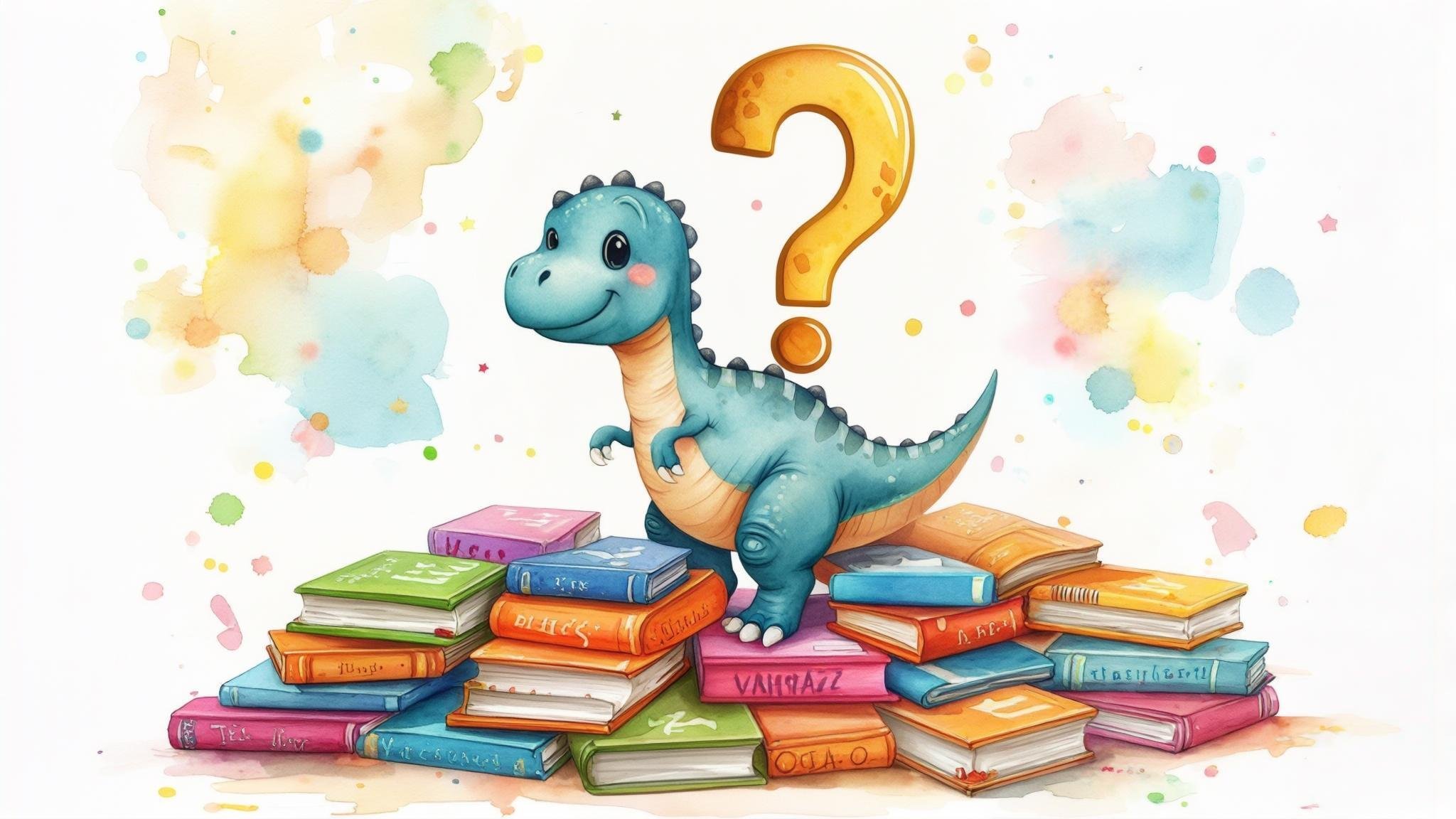
The more seriously people begin thinking about living with a dinosaur, the more likely they are to assume that information from the internet, social media, or movies is “common knowledge.”
But in reality, many of those ideas are misconceptions or modern myths that can create unnecessary barriers to dinosaur care.
So here are 10 common misunderstandings about keeping dinosaurs, answered clearly with explanations and reasoning.
Let’s take a closer look at what’s actually true.
❓Q1: Aren’t all dinosaurs giant, carnivorous predators?
🟢A1: No. Many dinosaurs were herbivores, and numerous species were small in size.
For example, Protoceratops and Hypsilophodon were herbivores around 1–2 meters long—roughly the size of a medium dog—making them ideal candidates for indoor care.
The idea that “Tyrannosaurus = all dinosaurs” comes largely from movies.
❓Q2: Aren’t dinosaurs all aggressive and incapable of bonding with humans?
🟢A2: Many species—especially herbivores—are believed to have gentle temperaments.
Herbivorous dinosaurs were likely timid and avoided conflict, and smaller species may develop trust and bonds with humans.
Much like modern reptiles and birds, individuals differ, but many can become quite affectionate.
❓Q3: Dinosaur calls must be deafening, right?
🟢A3: Not all dinosaurs produced extremely loud sounds.
While large species may exceed 100 dB, small dinosaurs are estimated at around 70–80 dB—similar to a dog.
With proper training, dinosaurs can also learn quiet hours.
So no, “always loud” is not accurate.
❓Q4: Isn’t the food cost insanely high—like ¥100,000 per month?
🟢A4: Food costs vary widely depending on size and species.
Small herbivorous dinosaurs can cost as little as ¥7,000–8,000 per month.
Even carnivores can be kept under ¥10,000 with budget strategies.
Buying frozen meat on sale or using bulk grocery stores helps keep costs at a typical “pet level.”
❓Q5: If a dinosaur escapes, isn’t it impossible to capture?
🟢A5: With GPS tags and proper training, escape prevention is very manageable.
Pet-sized GPS trackers are widely available, enabling real-time location tracking.
Training them to return when called greatly reduces escape risks.
❓Q6: My room is only 6 tatami mats. Isn’t that too small?
🟢A6: Some species can live comfortably in a 6-tatami space.
Small dinosaurs can use such a room as both a living and exercise space.
With anti-slip flooring, escape-proof fencing, and soundproofing, even a studio apartment can work as a proper habitat.
❓Q7: Won’t my home get destroyed if dinosaurs can’t be trained?
🟢A7: Dinosaurs can learn toileting, feeding routines, and sleeping patterns.
Their learning ability is believed to be similar to birds and reptiles, meaning training is absolutely possible.
Small herbivores especially can learn commands like “come when called” or “sit when cued.”
❓Q8: If they get sick, there’s no vet who can treat them, right?
🟢A8: Exotic animal veterinarians may be capable of providing care.
While dinosaurs are extinct and hypothetical, vets who treat reptiles and amphibians can likely adapt their expertise.
In the future, a new profession—“dinosaur specialist vet”—could emerge.
❓Q9: I can’t even imagine taking care of an elderly dinosaur.
🟢A9: Dinosaurs also experience a “senior stage,” and proper care is possible.
Small species may live 10–20 years. Preparing senior-care supplies—support harnesses, soft flooring, easily digestible food—can ensure comfort.
Most existing gear for aging pets can be adapted.
❓Q10: Isn’t dinosaur ownership just a joke?
🟢A10: Precisely because it’s imaginary, it becomes a “modern adventure” full of learning opportunities.
This series isn’t meant as a joke—it’s an exploration of
how far imagination can be shaped into realistic world-building.
Thinking “What if dinosaurs existed?” and “What would caring for them require?”
helps develop marketing skills, creativity, structure thinking, and writing ability.
✅Summary: False Assumptions Hold You Back
-
The idea that dinosaurs = huge, dangerous, and untamable is pure misconception
-
With proper preparation, dinosaur care can be simulated realistically
-
Don’t rely solely on movies or social media—build real knowledge instead
-
The process of making fantasy realistic is a powerful learning experience
🐾Some may say, “Keeping a dinosaur is impossible.”
But the real fun lies in asking, “How can we bring the impossible closer to reality?”
Use this Q&A as inspiration to design your own version of a “dinosaur life.”
🔖If any of these made you think “I totally misunderstood that!”, please leave a like or comment!
🔍📌Bonus ②: Which Dinosaur Is Perfect for You? Personality Match Diagnosis!
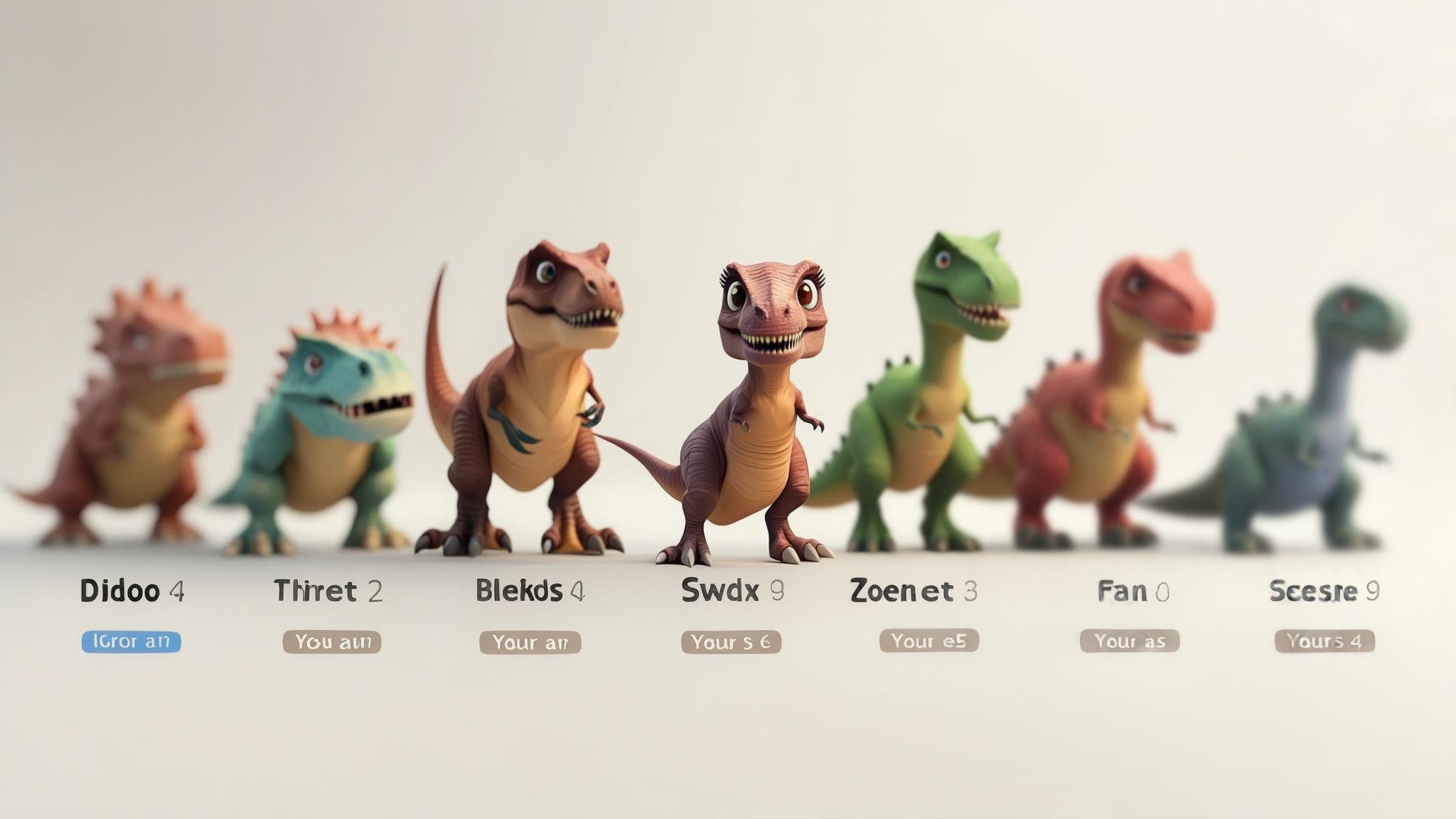
Are you imagining not just “Can I keep a dinosaur?” but also “Which dinosaur would I want to live with?”
The world of dinosaurs is incredibly diverse—temperament, size, diet, activity level, and more vary widely.
Just like with real pets, choosing a dinosaur that matches your own personality is extremely important.
So today, we’ve prepared a fun personality-matching quiz that helps you discover your ideal dinosaur.
Simply answer the questions, and you’ll find out which dinosaur type best fits your lifestyle and character!
✅Let’s begin! Answer these 5 questions
Q1. How do you spend your days off?
A. I like being active outdoors
B. I prefer relaxing at home with movies or books
C. It depends on my mood—both are good
Q2. What do you expect from an animal companion?
A. Presence, coolness, power!
B. Healing, cuteness, calm vibes
C. Intelligence and responsiveness
Q3. How much time can you spend with your pet each day?
A. I can devote 2–3 hours
B. 30 minutes to an hour is manageable
C. My schedule varies—some days more, some days less
Q4. How do you feel about sounds and vocalizations?
A. Noise doesn’t bother me—it’s a sign of energy
B. I prefer quiet, low-trouble companions
C. Moderate sounds are fine depending on timing and tone
Q5. Thinking about the future, what matters most?
A. I want a long-term companion—ideally a lifelong bond
B. Less effort is ideal; I’d prefer a low-maintenance partner
C. I’m open to challenges if it means a special experience
🔍Your diagnosis results!
Check which letter you chose most often, then read your matching dinosaur below!
✨【If you chose mostly A】
▶ Your best match: Velociraptor
If you love activity and a bit of excitement, the agile, intelligent, small carnivore Velociraptor is perfect for you.
This dinosaur is highly perceptive and can react to human expressions and voices. That means training and interactive play are incredibly rich.
You can enjoy outdoor exercises and cooperative activities—almost like raising and learning together.
One thing to note: if under-stimulated, they may scratch walls or act out, so a well-prepared environment and active engagement are essential.
Their size is around 1–1.5 meters—about the space needed for two small dogs.
🌿【If you chose mostly B】
▶ Your best match: Psittacosaurus
If you value peaceful, calm moments, the small herbivore Psittacosaurus is ideal for you.
This 1-meter-long dinosaur resembles a bird in some ways, with gentle behavior and soft, quiet vocalizations.
Its mainly veggie diet means less odor, and waste cleanup is easy—making it perfect for apartments and rental spaces.
About 30 minutes of daily interaction is enough to keep it happy, making it a great choice for busy people.
🧠【If you chose mostly C】
▶ Your best match: Troodon
If you’re balanced, curious, and intellectually driven, the high-intelligence dinosaur Troodon is your ideal partner.
Known as a species between “bird and reptile,” Troodon can learn routines very quickly.
They can learn their name, master toilet habits, respond to cues—more like a companion or partner than a typical pet.
They adapt well to fluctuating schedules, making them an excellent match for remote workers or people with irregular routines.
📝Every dinosaur has its own personality. What matters is “compatibility.”
How was your result?
This is, of course, a fictional fun exercise—but thinking about compatibility is a crucial step in any realistic care simulation.
-
Your personality and lifestyle
-
Each dinosaur species’ traits
-
Your available time, budget, and environment
If you’ve found a dinosaur that makes you think “I could live with this one,”—that might be a small sign of destiny.
✅Summary: Which “new family member” will you choose?
Even though dinosaur keeping is fictional, it’s filled with insights that apply to real modern pet life.
If this quiz made you feel “This dinosaur might be good for me,”
try re-reading that dinosaur’s chapter again—you may find new ideas waiting for you.
Fresh discoveries often hide in the details.
💬“I think I’m definitely a Psittacosaurus type!”
💬“Velociraptor—too cool not to choose!”
Feel free to share your results in the comments!
🦖May your new story with dinosaurs begin right here.

Comment